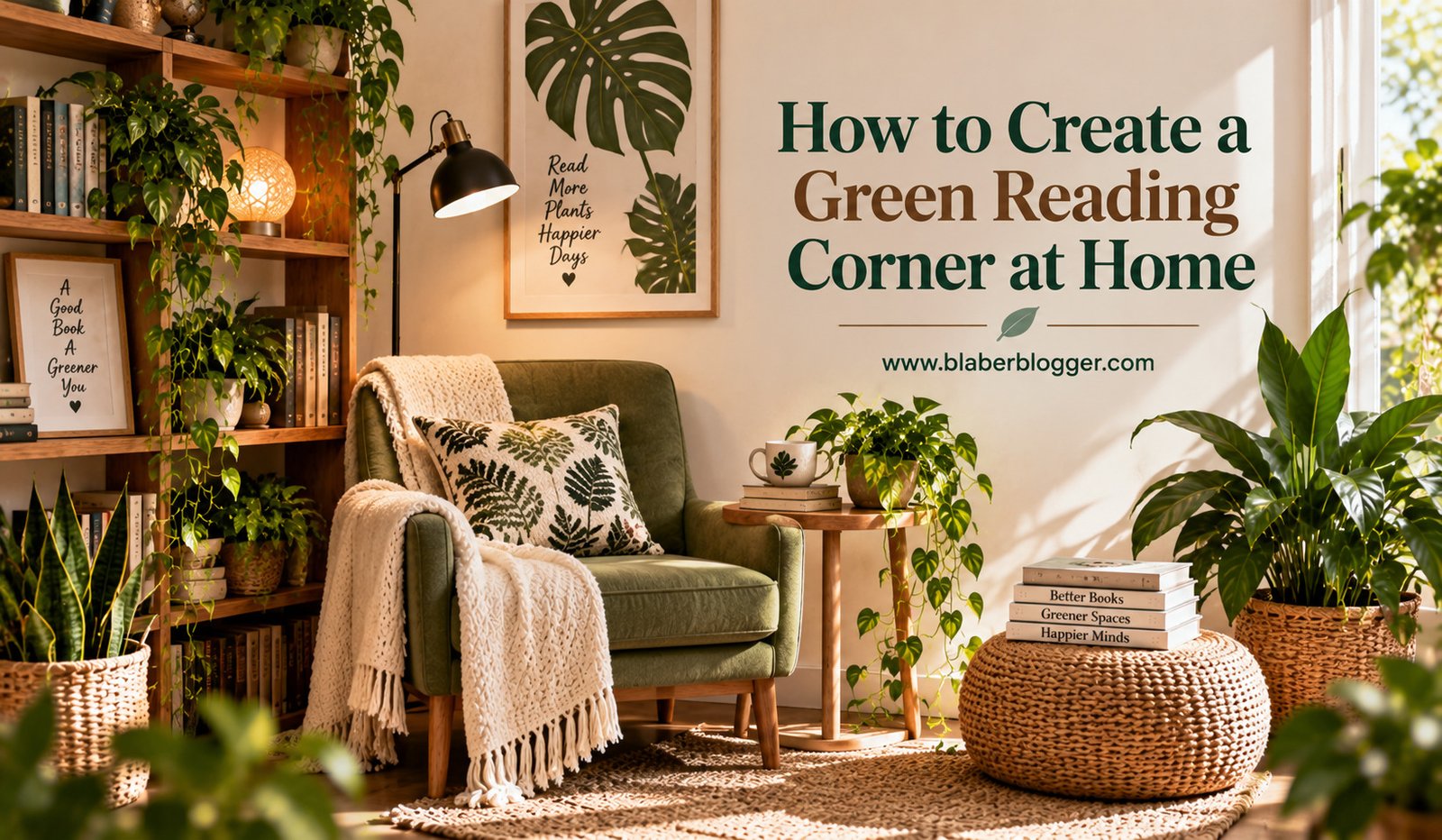
A reading corner is more than just a place to sit with a book. With the right combination of comfortable furniture, soft lighting, and indoor plants, you can create a peaceful green retreat where you can relax and enjoy quiet moments. Plants add freshness, natural texture, and visual warmth, making them an excellent choice for transforming an unused corner into a cozy reading space.
You do not need a large room or an expensive makeover to create this setup. A comfortable chair, a small table, suitable lighting, and a few carefully selected plants can be enough. The key is to balance comfort, greenery, and functionality so the space feels inviting without becoming crowded.
Choose the Right Location for Your Reading Corner
The first step is finding a suitable area in your home. Look for an underused corner near a window, beside a bookshelf, or in a quiet section of the living room or bedroom.
Natural light can make the space feel brighter and more pleasant, while also benefiting plants that require sunlight. However, avoid placing plants directly in harsh sunlight unless they are suitable for those conditions.
A corner near a window is often ideal because it provides both natural light for reading and a suitable environment for many indoor plants.
Make Use of Unused Corners
A small corner that currently holds little more than a lamp or decorative object can become a relaxing reading area. You do not need to occupy the entire space with furniture.
Keep enough open area around the chair so the corner does not feel cramped. A small side table and one or two plants may be all you need to create a finished look.
Select a Comfortable Reading Chair
The chair should be the main feature of your reading corner. Choose something that provides good support and allows you to sit comfortably for an extended period.
An upholstered armchair can create a warm and traditional appearance, while a wooden or minimalist chair may suit a contemporary interior. Add a soft cushion or throw to make the space more inviting.
A large chair may be comfortable but could overwhelm a small corner.
Add Indoor Plants for a Natural Atmosphere
Plants are what give a green reading corner its distinctive character. You do not need dozens of plants. A few thoughtfully placed varieties can create a natural atmosphere without distracting from the reading experience.
Choose plants according to the available light and the amount of care you want to provide. Foliage plants with attractive leaves are especially useful because they add greenery throughout the year.
Some suitable choices include:
- Snake plants for structured, upright greenery.
- Pothos for soft trailing foliage.
- ZZ plants for low-maintenance decoration.
- Spider plants for light and graceful leaves.
The goal is to create a peaceful green background rather than turn the reading corner into an overcrowded plant collection.
Create Different Levels With Plant Stands
Plant stands are useful for adding height and making the arrangement more visually interesting. Instead of keeping every plant on the floor, place some on stands beside the chair or near a shelf.
A tall plant can fill vertical space behind the chair, while a smaller plant on a stand can sit closer to the reading table. This layered approach gives the corner more depth.
Use a Mix of Plant Heights
Combining different heights prevents the area from looking flat. A simple arrangement might include a tall floor plant, a medium plant on a stand, and a small plant on the side table.
Avoid using too many stands in a small space. Two or three different levels are usually enough to create an attractive display.
Choose the Right Lighting
Lighting is essential for a reading corner. Natural light is excellent during the day, but a dedicated reading lamp is important for evenings.
A floor lamp positioned beside the chair can provide focused illumination without taking up table space. A small table lamp can also work well if you have a side table.
Warm, comfortable lighting can make the corner feel more relaxing, while adjustable lamps allow you to direct light exactly where you need it.
| Lighting Option | Best Use | Décor Effect |
| Floor lamp | Beside reading chair | Elegant and practical |
| Table lamp | Side table | Cozy |
| Wall lamp | Compact corners | Space-saving |
| Natural light | Daytime reading | Fresh and bright |
| Adjustable lamp | Evening reading | Flexible |
Make sure the light does not create glare on your book or screen.
Add a Small Side Table
A reading corner is more practical when you have somewhere to place your book, cup, glasses, or other small items. Choose a side table that fits comfortably beside the chair.
A wooden table can reinforce the natural theme, while a simple metal or glass table can create a modern contrast.
Keep the tabletop relatively clear. One small plant, a lamp, and a book can create a balanced arrangement without making the surface look crowded.
Use Shelves to Combine Books and Plants
If you have enough wall or floor space, a bookshelf can become an important part of your green reading corner. Open shelves allow you to display books alongside small plants and decorative objects.
Arrange books both vertically and horizontally to create visual variation. Place compact plants between groups of books rather than putting plants on every shelf.
Trailing plants can be particularly attractive on upper shelves because their foliage can naturally fall downward.
Create a Balanced Shelf Display
A successful bookshelf arrangement does not need to be perfectly symmetrical. Instead, create small groups of books and greenery while leaving some open space.
You can include:
- Books arranged by size or color.
- Small plants in decorative containers.
- A few personal decorative objects.
- Open areas to prevent visual clutter.
Choose Pots That Match the Reading Area
The right pot can make a simple plant look like an intentional décor feature.
For a natural reading corner, terracotta, ceramic, woven, or stone-effect planters can work well. Neutral colors create a calm appearance, while earthy shades add warmth.
Try to coordinate the pots with your chair, table, bookshelf, or flooring. You do not need every planter to match exactly, but repeating a similar material or color can create consistency.
Add Soft Textiles and Natural Materials
Plants look especially attractive when combined with comfortable textures. Add a soft rug beneath the chair or a woven throw over the armrest.
Wooden furniture, baskets, cotton cushions, and natural fabrics can reinforce the connection between greenery and the rest of the room.
Avoid adding too many decorative elements. The purpose of the corner is relaxation, so every item should contribute to comfort or atmosphere.
Create a Calm Color Palette
Green naturally works well with neutral tones. White, cream, beige, light brown, gray, and muted earthy shades can create a soothing backdrop for plants.
If your room already contains bold colors, use simple planters and furniture so the plants become a refreshing accent rather than another competing feature.
A consistent palette can also make a small reading corner feel more spacious and organized.
Keep Plant Care Simple
A reading corner should be relaxing, not another source of daily work. Choose plants that match your routine and the conditions in the space.
Check the soil before watering instead of following a fixed schedule. Make sure containers have suitable drainage and protect furniture and flooring with trays or saucers.
Keep leaves clean by gently removing dust when needed. Healthy, well-maintained plants will make the reading corner look much more attractive.
Common Mistakes to Avoid
While greenery is the main feature, overcrowding can make the space feel smaller and interfere with comfortable movement.
Another mistake is ignoring lighting. A plant may look perfect beside your chair but struggle if the location does not provide suitable light.
Avoid placing plants where they block lamps, windows, shelves, or pathways. The best reading corners feel open, comfortable, and easy to use.
Frequently Asked Questions
1. What plants are best for a reading corner?
Snake plants, pothos, ZZ plants, spider plants, and other adaptable foliage plants can work well. Select plants according to the available light and your preferred level of maintenance.
2. How many plants should I use in a reading corner?
There is no fixed number, but three to five plants of different sizes can create a balanced green effect in many spaces. Smaller corners may need only one or two plants.
3. Can I create a green reading corner in a small room?
Yes. Use a compact chair, narrow side table, vertical plant stands, and small plants.
4. Where should I place plants in a reading corner?
Plants can be placed beside the chair, on a side table, on shelves, or in an empty corner. Choose positions based on the plant’s light requirements and keep walkways clear.
5. How can I make my reading corner feel cozier?
Add comfortable cushions, a soft throw, warm lighting, a small rug, and a few well-placed plants. Natural materials such as wood and woven textures can make the area feel even more inviting.
Final Thoughts
Creating a green reading corner at home is a simple way to combine comfort with natural beauty. You do not need a large budget or a dedicated room. A comfortable chair, suitable lighting, a small table, and carefully selected plants can transform an unused corner into a peaceful retreat.
Focus on balance rather than quantity. Choose plants that suit the available light, use different heights to create depth, and select pots and furniture that complement your existing décor. Add soft textiles and warm lighting to complete the atmosphere.
With thoughtful planning, your green reading corner can become one of the most relaxing spaces in your home—a place where books, comfort, and greenery come together naturally.