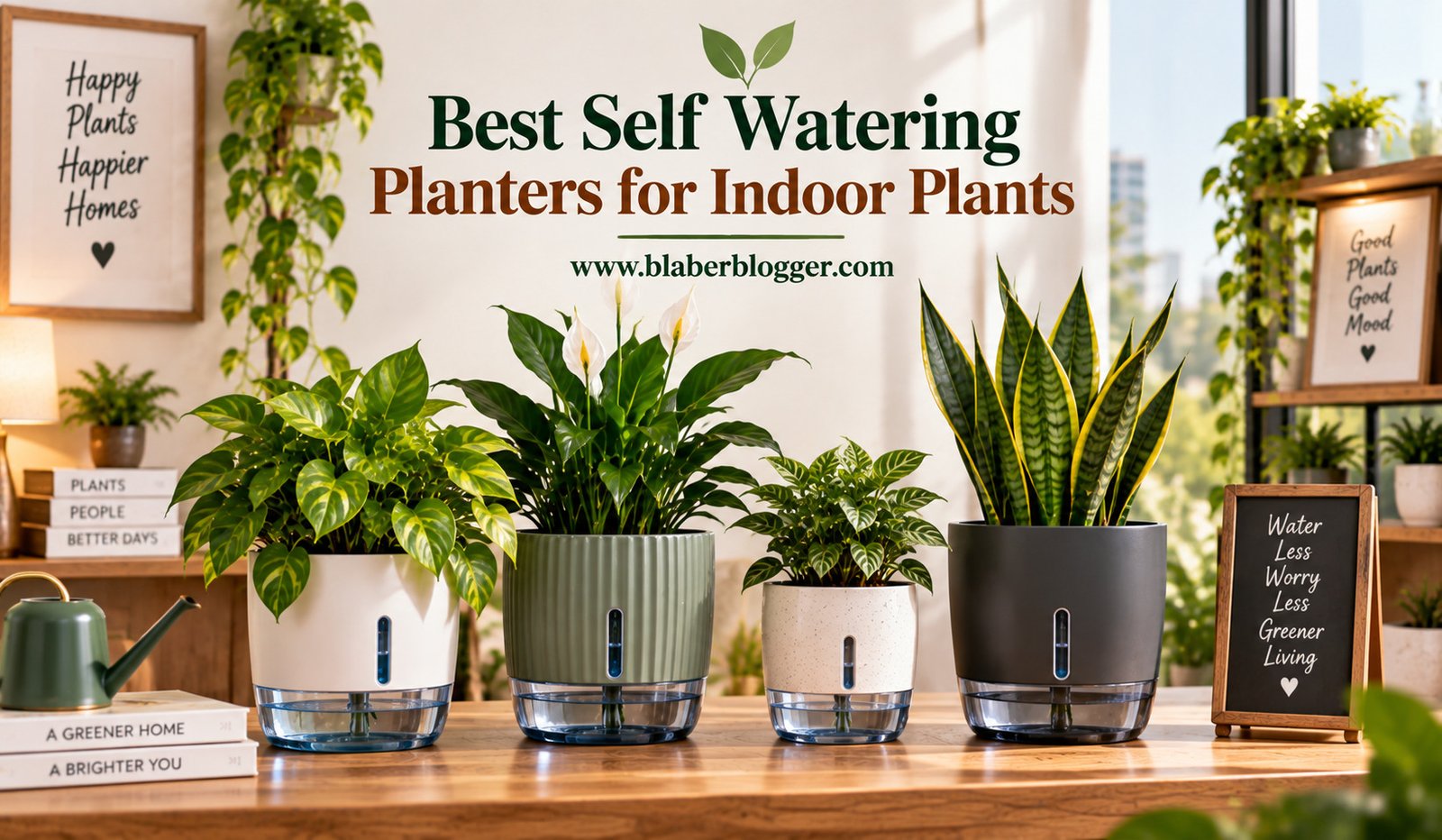
Keeping indoor plants healthy can be challenging when watering schedules become difficult to maintain. Busy routines, travel, changing indoor temperatures, and simple forgetfulness can all lead to plants receiving too much or too little water. Self-watering planters offer a convenient solution by storing water and making moisture available to the plant gradually.
These planters can also make indoor gardening more manageable for beginners. Instead of watering every plant manually at the same frequency, you can use a reservoir-based system that helps maintain a more consistent supply of moisture.
However, not every self-watering planter is suitable for every plant. Understanding how these containers work, what features to look for, and which plants are compatible can help you choose the right option for your home.
What Is a Self-Watering Planter?
A self-watering planter is a container designed with a separate water reservoir. Depending on the design, moisture moves from the reservoir into the growing medium through a wick, capillary action, or another water-delivery system.
The plant is not usually sitting directly in water. Instead, the system allows moisture to reach the roots gradually. This can help reduce the risk of inconsistent watering when the planter is used correctly.
Self-watering containers come in many styles, from small tabletop pots to larger decorative planters designed for floor plants. Some have visible water-level indicators, while others use hidden reservoirs.
Benefits of Self-Watering Planters
The biggest advantage is convenience. Once the reservoir is filled, the planter can provide moisture for a period of time without requiring daily watering.
This can be particularly useful for people with busy schedules or for households with several indoor plants. Self-watering systems can also make it easier to maintain consistent moisture for plants that prefer evenly moist soil.
Some key advantages include:
- Less frequent manual watering.
- More consistent moisture availability.
- Reduced risk of accidental overwatering when used properly.
- Convenient maintenance for busy plant owners.
However, self-watering planters are not completely maintenance-free. The reservoir still needs to be checked and cleaned, and the plant’s soil should be monitored.
Best Types of Self-Watering Planters
Different self-watering systems work in slightly different ways. Choosing the right design depends on your plant, available space, and preferred appearance.
Wick-Based Self-Watering Planters
Wick systems use an absorbent material to move water from the reservoir into the soil. They are simple and commonly found in small indoor planters.
These containers work well for compact plants that prefer steady moisture. They are particularly useful on desks, shelves, and windowsills.
Reservoir Planters With Water Indicators
Some modern self-watering planters include a visible indicator that shows how much water remains in the reservoir. This feature can make maintenance easier because you do not have to guess when the planter needs refilling.
These designs are useful for beginners who are still learning how to manage indoor plants.
Decorative Self-Watering Pots
Self-watering planters do not have to look purely functional. Many are designed with attractive ceramic-style finishes, neutral colors, or contemporary shapes.
Decorative models are ideal for living rooms, bedrooms, offices, and other areas where the planter needs to complement the interior décor.
Large Self-Watering Floor Planters
Larger versions can be useful for medium and large indoor plants. Their bigger reservoirs can reduce the frequency of refilling, although the exact duration depends on the plant and indoor conditions.
These planters are particularly convenient when moving large plants for watering would be difficult.
How to Choose the Best Self-Watering Planter
The best planter should match the plant’s needs rather than simply offering the largest reservoir or most attractive appearance.
Consider the Plant’s Water Requirements
Not every indoor plant benefits from constant moisture. Plants such as many succulents and cacti prefer their soil to dry between waterings, so a continuously moist environment may be unsuitable.
Plants that prefer more consistent moisture can generally make better use of self-watering systems.
Check the Reservoir Size
A larger reservoir can reduce how often you need to refill the container, but bigger is not always better. The reservoir should be proportional to the plant and planter.
A very large water reservoir paired with a small plant can encourage unnecessary moisture retention.
Look for Drainage and Airflow
Good self-watering planters should still provide an appropriate growing environment for roots. The design should separate the water reservoir from the growing medium in a way that helps prevent the soil from becoming permanently saturated.
Before purchasing, understand how the reservoir, wick, soil area, and drainage system work together.
Self-Watering Planters for Different Indoor Plants
Different plants have different moisture preferences, so the planter should be selected accordingly.
| Indoor Plant | Self-Watering Suitability | Suggested Planter Type |
| Pothos | Good | Wick or reservoir planter |
| Spider Plant | Good | Medium reservoir planter |
| Peace Lily | Good | Water-level indicator planter |
| Ferns | Often suitable | Consistent-moisture planter |
| ZZ Plant | Moderate | Controlled reservoir |
| Snake Plant | Limited | Well-draining setup |
| Succulents | Usually unsuitable | Standard draining pot |
The table is a general guide. Your plant’s growing conditions, soil mix, temperature, and light exposure can affect its water requirements.
Best Self-Watering Planters for Busy Plant Owners
For busy homeowners, convenience is often the main reason to choose a self-watering planter. A container with a clear water-level indicator can make routine care easier.
Look for designs that are easy to refill without moving the plant. A wide opening or accessible reservoir can also simplify maintenance.
If you travel regularly, remember that a self-watering planter should not be treated as a guarantee that the plant will remain healthy indefinitely. Reservoir capacity and plant requirements vary considerably.
Use Self-Watering Planters for Office Plants
Self-watering planters can be especially practical for office desks and workspaces. They reduce the need to keep watering equipment nearby and can help plants receive moisture more consistently.
Compact pothos, spider plants, peperomia, and other suitable varieties can look attractive in small self-watering containers.
Choose a planter with a secure reservoir to reduce the possibility of spills near computers and other electronics.
Decorative Options for Home Interiors
A planter can function as both a growing container and a décor element. Modern self-watering pots are available in styles that suit minimalist, contemporary, rustic, and traditional interiors.
Neutral finishes can blend easily with existing furniture, while textured or colored containers can become accent pieces.
For living rooms, a large self-watering floor planter can support a statement plant. For bedrooms or offices, smaller tabletop versions may be more appropriate.
How to Use a Self-Watering Planter Correctly
Using a self-watering planter properly is important. Do not assume that the reservoir should always remain full.
When setting up a new planter, follow the container’s design instructions and use an appropriate growing medium. Give the plant time to establish its roots before relying heavily on the reservoir system.
Keep an eye on the soil as well as the water indicator. If the soil remains excessively wet, the system may not be suitable for that particular plant.
A simple maintenance routine includes:
- Checking the reservoir regularly.
- Monitoring soil moisture.
- Cleaning the container periodically.
- Watching for signs of stressed or unhealthy roots.
Common Mistakes to Avoid
One of the biggest mistakes is treating every plant the same way. Some plants need regular moisture, while others need periods of dryness.
Another common error is filling the reservoir too frequently. More water does not necessarily mean healthier plants. Always consider the plant’s natural watering preference.
Ignoring cleaning is another issue. Mineral deposits, algae, and debris can build up inside reservoirs over time. Cleaning the planter occasionally helps keep the system functioning properly.
Finally, do not place a self-watering planter in unsuitable light simply because watering has become easier. Light remains one of the most important factors in indoor plant health.
Frequently Asked Questions
1. Are self-watering planters good for indoor plants?
Yes, they can be very useful for indoor plants that prefer consistent moisture. They are especially convenient for busy plant owners, but the planter must be matched to the plant’s watering needs.
2. Do self-watering planters prevent overwatering?
They can reduce inconsistent watering, but they do not automatically prevent overwatering. If a plant prefers dry soil, a constantly moist reservoir system may still cause problems.
3. Which plants work best in self-watering pots?
Plants that generally prefer evenly moist conditions, such as pothos, spider plants, peace lilies, and some ferns, can be suitable choices.
4. How often should I refill a self-watering planter?
There is no universal schedule. Reservoir size, plant type, room temperature, humidity, and light all affect water consumption. Check the water level and soil rather than following a fixed calendar.
5. Can succulents grow in self-watering planters?
Most succulents are better suited to well-draining containers that allow the soil to dry between waterings. A continuously moist self-watering system may not be appropriate for them.
Final Thoughts
Self-watering planters can make indoor plant care simpler by providing a convenient reservoir-based moisture system. They are especially useful for busy homeowners, offices, and anyone who wants to make routine watering more manageable.
The best self-watering planter is not necessarily the largest or most expensive option. It should match the plant’s moisture requirements, offer an appropriate reservoir, provide a healthy root environment, and suit your interior style.
Before choosing one, consider the plant, pot size, drainage design, reservoir capacity, and maintenance requirements. With the right combination, a self-watering planter can make indoor gardening easier while keeping your plants looking fresh and your home beautifully green.