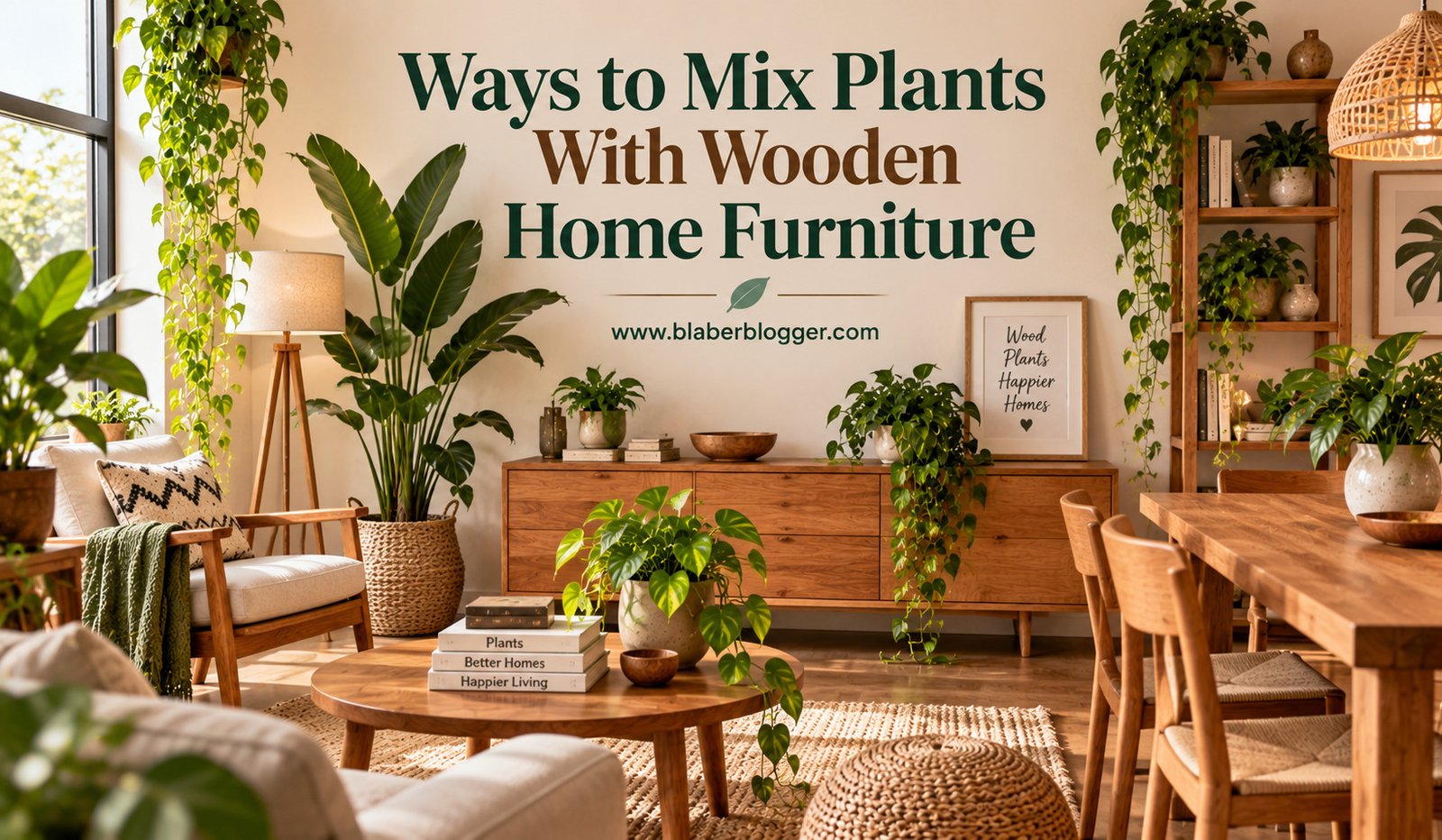
Wooden furniture brings warmth, texture, and a natural character to interior spaces. When combined with indoor plants, it can create a balanced environment that feels fresh, comfortable, and inviting. The earthy appearance of wood naturally complements the organic shapes and green tones of plants, making the combination suitable for almost any home décor style.
Whether you have a modern coffee table, a traditional wooden cabinet, or a simple bookshelf, adding plants can make the furniture feel more connected to nature. The right plant, pot, placement, and scale can make the entire arrangement look intentional.
Here are practical and creative ways to mix plants with wooden home furniture while keeping your interiors stylish and organized.
Why Plants and Wooden Furniture Work So Well Together
Plants and wood share natural visual qualities. Wooden furniture often features warm brown, beige, honey, or deep earthy tones, while plants introduce different shades of green. This combination creates a calming contrast without feeling overly dramatic.
The texture of wood also works well with the soft, irregular shapes of leaves. A smooth wooden surface can provide a clean background for plants with large leaves, while rustic furniture can pair beautifully with trailing vines or textured foliage.
Plants can also soften furniture with strong lines. A rectangular wooden cabinet may appear heavy on its own, but a leafy plant placed beside it can add movement and create a more relaxed appearance.
Choose Plants According to Your Furniture Style
The first step is to consider the style and color of your wooden furniture. Plants should complement the furniture rather than make the room feel visually crowded.
Pair Modern Wood Furniture With Clean Plant Shapes
Modern wooden furniture often has simple lines, smooth finishes, and minimal decoration. Plants with structured leaves can work especially well in these settings.
Consider plants with upright growth or simple foliage and place them in neutral pots. White, beige, black, or muted ceramic planters can maintain the clean appearance of contemporary interiors.
For example, a tall leafy plant beside a wooden console can create an elegant focal point without adding unnecessary decoration.
Use Lush Plants With Rustic Wooden Furniture
Rustic, reclaimed, or distressed wood has a more relaxed personality. It pairs naturally with plants that have fuller foliage, trailing stems, or slightly wild growth.
A wooden sideboard decorated with several leafy plants can create a warm, countryside-inspired atmosphere. Terracotta, woven, or textured planters can enhance the natural character of the furniture.
Add Minimal Greenery to Scandinavian-Inspired Furniture
Light-colored wood and Scandinavian furniture generally look best with simple greenery. Instead of filling the room with plants, choose a few carefully positioned varieties.
Place Plants on Wooden Tables
Wooden coffee tables, side tables, and console tables are excellent locations for smaller indoor plants.
A tiny pot can disappear on a large coffee table, while a very large plant may overwhelm a narrow side table. Medium-sized plants usually work well on wider surfaces, while smaller varieties are better for compact tables.
Use decorative trays beneath pots to protect the wooden surface from water, soil, and moisture. This simple step can also make several small plants look like one coordinated display.
Create a Balanced Table Arrangement
When decorating a wooden table with plants, avoid placing everything in the center. A slightly off-center arrangement often looks more natural.
The goal is to create visual balance without making the surface look overcrowded.
Style Plants Around Wooden Cabinets
Wooden cabinets and storage units often provide large vertical surfaces that can benefit from greenery. Plants can soften the appearance of large furniture pieces and introduce visual variety.
If the cabinet has multiple shelves, avoid placing a plant on every level. Leaving some spaces empty helps the arrangement look more intentional.
Trailing plants can be particularly effective on open wooden shelving because their leaves can fall naturally over the edges.
Use Wooden Shelves as Plant Displays
Their natural material provides an attractive backdrop for colorful foliage and decorative planters.
Instead of arranging plants in a straight row, vary their heights and shapes. Combine upright plants with compact varieties and trailing foliage to create depth.
A simple shelf arrangement can include:
- A small plant in a decorative pot.
- A trailing plant placed near an edge.
- A medium plant surrounded by a few decorative objects.
- Empty space between groups to prevent visual clutter.
This approach works particularly well in living rooms, bedrooms, home offices, and entryways.
Match Plant Pots With Wooden Furniture
Even a beautiful plant can feel disconnected if its container clashes with the furniture.
Wooden furniture generally pairs well with natural materials and neutral colors. Ceramic, terracotta, stone-effect, woven, and matte-finish planters can all work effectively.
| Wooden Furniture Style | Suitable Pot Style | Plant Look |
| Light modern wood | White or neutral ceramic | Simple foliage |
| Dark wood | Matte black or earthy pots | Deep green plants |
| Rustic wood | Terracotta or woven pots | Lush greenery |
| Scandinavian wood | Minimal ceramic pots | Compact plants |
| Reclaimed wood | Textured or handmade pots | Trailing plants |
Try to repeat one or two colors throughout the room. This creates a visual connection between the furniture, plants, and other decorative elements.
Create Height With Wooden Plant Stands
A tall plant stand can bring a small plant closer to eye level, while shorter stands can create different heights within a group. This layered effect works well in empty corners or beside sofas.
Avoid using too many stands with identical heights. Mixing low and high levels can make the display more dynamic.
Use Plants to Soften Wooden Furniture Corners
Large wooden furniture can sometimes make a room feel visually heavy. Plants are an easy way to soften these areas.
A tall plant beside a wooden entertainment unit, wardrobe, or bookcase can break up large solid surfaces. Similarly, a compact plant can make a wooden desk feel more welcoming without taking away valuable workspace.
For corners, plants with naturally vertical growth are useful because they fill unused height without requiring a large amount of floor space.
Bring Plants Into the Dining Area
Wooden dining tables already have a natural and welcoming appearance, making them ideal for plant decoration. Instead of using large plants that block conversation, choose small centerpieces.
A low ceramic pot with compact foliage can work beautifully in the middle of a dining table. For larger dining spaces, a plant can also be placed on a nearby wooden console or sideboard.
Keep the arrangement simple so that plants enhance the dining area without interfering with meals or everyday use.
Protect Wooden Furniture From Plant Damage
Although wood and plants complement each other beautifully, moisture can damage wooden surfaces. Water rings, damp soil, and condensation can leave marks over time.
Always use a waterproof tray or saucer beneath plant containers. Wipe spills immediately and avoid allowing excess water to remain beneath a pot.
For valuable wooden furniture, consider using a decorative outer planter with a waterproof inner container. This provides an additional layer of protection while keeping the display attractive.
Common Styling Mistakes to Avoid
A successful plant-and-wood combination depends on balance. Too many plants can hide the furniture, while too few may not create the desired effect.
Avoid choosing plants that are all the same height. Different shapes and sizes create more visual interest. At the same time, using too many different pot styles can make the room look disconnected.
It is also important to consider lighting. A beautiful plant arrangement will not remain attractive if the plants are placed somewhere unsuitable for their light requirements.
Frequently Asked Questions
1. What plants look best with wooden furniture?
Plants with attractive foliage, such as broad-leaf varieties, trailing plants, palms, and compact tabletop plants, can complement wooden furniture beautifully. Choose varieties according to the available light.
2. Can I place plants directly on wooden furniture?
It is better to avoid placing pots directly on wood. Use a waterproof tray, saucer, or protective mat underneath the planter to prevent moisture damage.
3. What color pots work well with wood furniture?
Neutral, earthy, white, black, and terracotta-colored pots generally work well with wooden furniture. The best choice depends on the wood tone and overall room style.
4. How many plants should I place around wooden furniture?
There is no fixed number. Start with a few plants and arrange them according to the size of the room and furniture. Leaving some open space usually creates a cleaner appearance.
5. How can I style plants on wooden shelves?
Combine plants of different heights and growth patterns. Place trailing plants near the edges and upright plants toward the back while leaving empty spaces between groups for a balanced look.
Final Thoughts
Mixing plants with wooden home furniture is an easy way to bring natural warmth and freshness into your interiors. Wood provides texture and structure, while plants introduce movement, softness, and color. Together, they can create a comfortable atmosphere across living rooms, bedrooms, dining areas, offices, and entryways.
The best results come from choosing plants that suit the available light, selecting pots that complement the wood, and creating balanced arrangements with different heights and textures. With thoughtful placement and basic protection against moisture, your plants and wooden furniture can work together to create a stylish and welcoming home.