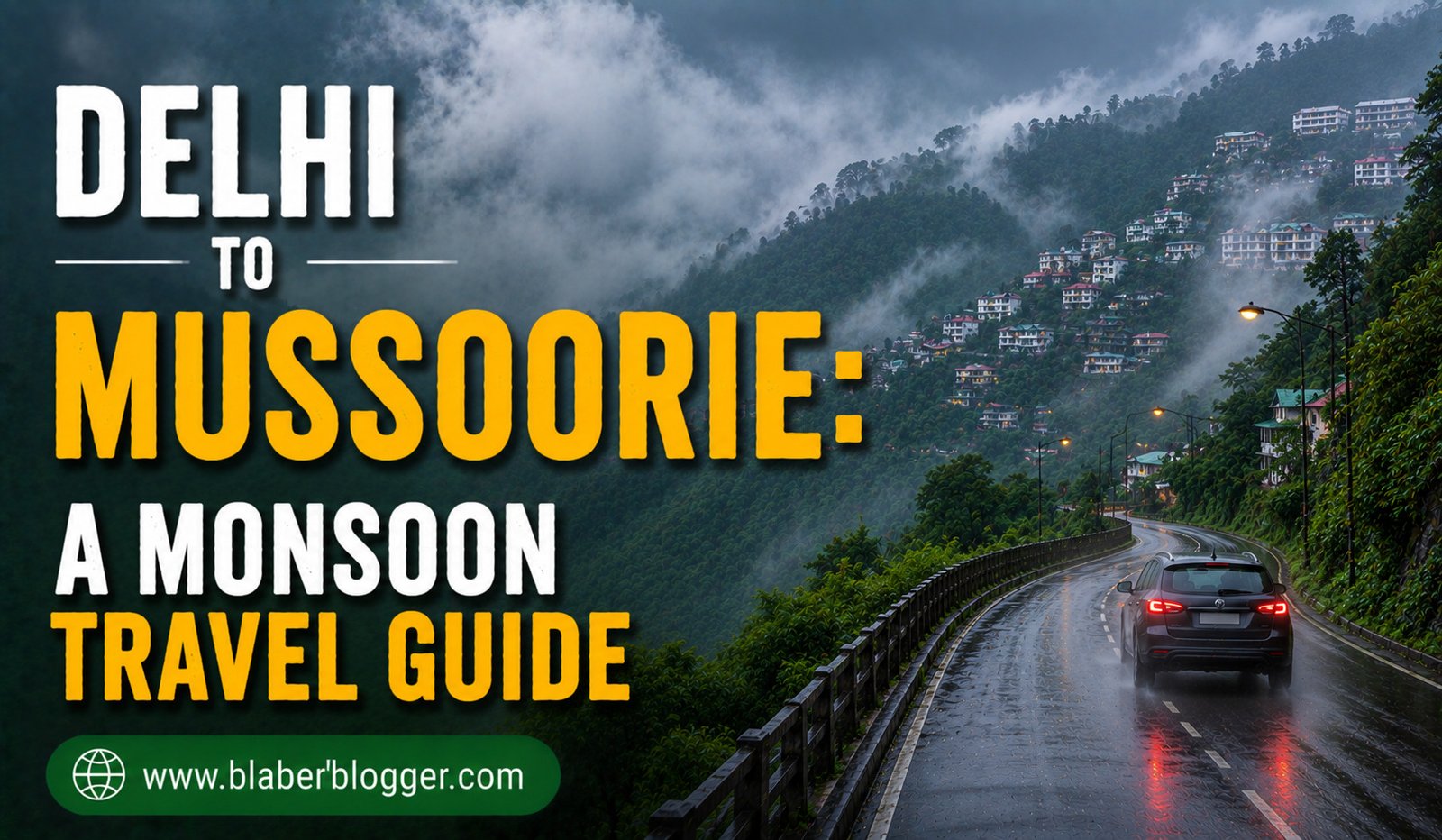
When the monsoon arrives in North India, the journey from Delhi to Mussoorie becomes an inviting escape from the heat, traffic and fast pace of city life. The plains gradually give way to green foothills, mist-covered valleys and winding mountain roads as you approach the famous hill station of Uttarakhand.
Mussoorie, often called the Queen of Hills, is particularly atmospheric during the rainy season. Clouds drift across the slopes, waterfalls become more active, forests take on deeper shades of green and the cool mountain air creates a refreshing contrast to Delhi’s humid weather.
The road journey from Delhi to Mussoorie is roughly 280 to 300 kilometres, depending on the route and starting point. A normal drive can take around six to eight hours, but monsoon rain, traffic and hill-road conditions can make the journey longer.
A successful monsoon trip is therefore less about rushing to reach Mussoorie and more about enjoying the journey, planning sensible stops and leaving enough flexibility for changing weather.
Why Visit Mussoorie During the Monsoon?
Mussoorie has a special charm during the rainy season. The mountains become covered in fresh vegetation, streams run through the valleys and mist often hides and reveals the landscape within minutes.
For travellers who enjoy photography, nature walks and cosy mountain stays, this season can be particularly rewarding. The rain also gives the town a quieter and more atmospheric character compared with the busy summer holiday period.
The weather can be unpredictable, however. Heavy showers may reduce visibility, make walking paths slippery and occasionally affect mountain roads. Travellers should therefore treat the monsoon as part of the experience rather than expecting perfect sightseeing conditions every day.
What Makes a Monsoon Trip Different?
A summer trip to Mussoorie may focus heavily on viewpoints and outdoor sightseeing. During monsoon, the destination becomes more about atmosphere.
You may wake up to clouds outside your hotel window, watch rain sweep across the valley, walk through a misty market and later discover that the same landscape has completely cleared. This changing scenery is one of the reasons many travellers enjoy visiting the hills during the rainy season.
Delhi to Mussoorie Route
The road journey generally passes through the plains before reaching Dehradun and then climbing into the hills towards Mussoorie. One commonly used corridor goes through Ghaziabad, Meerut, Muzaffarnagar and Roorkee before continuing towards Dehradun and Mussoorie.
Another option can involve the Delhi-Dehradun Expressway and onward travel from Dehradun. The best route on a particular day depends on your starting point, traffic, road conditions and weather.
The final mountain stretch deserves special attention during monsoon. Once you leave Dehradun, the road becomes winding and climbs steadily towards Mussoorie. Rain and fog can reduce visibility, so the last part of the journey should be driven patiently.
Useful Stops on the Way
A long road trip becomes easier when you plan one or two meaningful breaks rather than stopping repeatedly.
Some popular stopover options include:
- Meerut: A convenient early break for breakfast or refreshments.
- Roorkee: Useful for a longer rest before continuing towards the hills.
- Dehradun: A natural place to have lunch, refuel and prepare for the mountain drive.
- Rishikesh or Haridwar: Possible detours if you have additional time and want to include a spiritual or riverside stop.
Uttarakhand Tourism itself recommends the Delhi-to-Mussoorie journey via Dehradun and suggests starting early to make the most of the trip.
Best Places to Visit in Mussoorie During Monsoon
Mussoorie has enough attractions to fill several days, but a short monsoon holiday is best enjoyed without trying to cover everything.
Mall Road and Library Bazaar
Mall Road is the centre of Mussoorie’s tourist atmosphere. Shops, cafés, restaurants and old buildings line the busy stretch, making it a convenient place for an evening walk.
During rain, the area can become slippery and crowded, but the combination of umbrellas, mist and glowing shopfronts creates a distinctly hill-station atmosphere.
Nearby Library Bazaar provides another opportunity to explore the older side of town. Instead of treating these areas simply as shopping destinations, spend some time wandering through the streets and enjoying the colonial-era character.
Kempty Falls
Kempty Falls is one of the best-known attractions around Mussoorie. The waterfall becomes particularly lively during the rainy season when the surrounding landscape is lush and green.
However, stronger monsoon flow also means that visitors need to be cautious around the water. Slippery surfaces and sudden changes in water volume can make getting too close risky.
A safer approach is to enjoy the falls from designated viewing areas and avoid entering the water during heavy rainfall.
Lal Tibba
Located in Landour, Lal Tibba is one of the most popular viewpoints around Mussoorie. On clear days, the elevated location offers impressive views of distant mountain ranges.
During monsoon, visibility can be limited by clouds and mist. Rather than seeing this as a disadvantage, consider it part of the experience. The fog-covered hills and quiet surroundings can create a peaceful setting even when distant peaks remain hidden.
The Landour area is also ideal for a leisurely walk through old streets, cafés and forested surroundings.
Gun Hill
Gun Hill is another popular viewpoint in Mussoorie and is easily combined with a visit to Mall Road.
The monsoon atmosphere can make the surrounding valley appear dramatically different from one moment to the next. Clouds may cover the hills and then suddenly lift to reveal sections of the valley below.
If visibility is poor, there is little reason to stay for a long time. Move on to another attraction and return if the weather improves.
Explore Landour at a Slower Pace
One of the best ways to experience Mussoorie during monsoon is to spend time in Landour rather than filling the day with sightseeing.
The quieter roads, old homes, deodar trees and misty surroundings give this part of the hill station a distinctive character. A slow walk followed by tea or coffee at a local café can be more enjoyable than rushing between multiple attractions.
Landour is particularly appealing to travellers who prefer peaceful surroundings over crowded tourist spots. Rain often adds to its charm by making the forested roads look greener and the air feel cooler.
Enjoy Mussoorie’s Monsoon Food
Rainy weather and hot food make a natural combination. Mussoorie has plenty of cafés, restaurants and small food stalls where visitors can take shelter from the rain while enjoying something warm.
Hot momos, noodles, soups, pakoras and cups of tea are popular choices for a chilly afternoon. Travellers can also look for North Indian meals and local Garhwali dishes for a more regional experience.
Food should not be treated merely as a necessity during the trip. A long lunch while watching the rain outside can become one of the most relaxing moments of a monsoon holiday.
A Simple Three-Day Itinerary
A three-day plan works well for a Delhi-to-Mussoorie monsoon trip because it gives you enough time for the journey and sightseeing without making the holiday exhausting.
| Day | Suggested Plan |
| Day 1 | Start early from Delhi, travel towards Mussoorie via Dehradun, check in and explore Mall Road |
| Day 2 | Visit Lal Tibba, Landour, Gun Hill and Kempty Falls depending on weather |
| Day 3 | Enjoy a relaxed morning, explore local cafés and begin the return journey |
The itinerary should remain flexible. If heavy rain makes an outdoor attraction uncomfortable, replace it with café time, local shopping or a relaxed hotel stay.
Monsoon Road Trip Tips
Driving to Mussoorie during the rainy season can be enjoyable, but mountain roads require more attention than highways.
Before leaving Delhi, check the weather forecast and road conditions. Make sure the vehicle’s tyres, brakes, headlights and windshield wipers are working properly.
A few practical items can also make the journey more comfortable:
- Carry a waterproof jacket or umbrella.
- Pack shoes with good grip for wet paths.
- Keep extra clothes in a waterproof bag.
- Carry snacks and drinking water.
- Protect phones, cameras and chargers from rain.
- Keep some extra travel time for unexpected delays.
Avoid rushing through the mountain section. Fog, wet roads and sharp bends can appear together, and reaching Mussoorie slightly later is far better than taking unnecessary risks.
Is Monsoon Safe for a Delhi to Mussoorie Trip?
Monsoon travel can be safe when conditions are favourable, but the season requires greater caution. Heavy rainfall can affect visibility, create slippery roads and increase the possibility of landslides in hilly areas.
This does not mean travellers should automatically avoid Mussoorie during the rainy season. It simply means that the trip should be planned around the weather rather than around a fixed sightseeing schedule.
If very heavy rain is forecast, consider delaying the journey or choosing a more flexible itinerary. On the road, avoid stopping at unstable slopes, waterfall edges or places where water is flowing across the road.
Best Practices for Mountain Driving
The most important rule is to slow down. Maintain a safe distance from other vehicles and avoid sudden braking on wet roads.
Start the mountain section during daylight whenever possible. If fog becomes dense, reduce speed and use appropriate lights rather than attempting to maintain highway speeds.
If local authorities restrict access to a road or attraction because of weather, follow the restriction. No viewpoint or photograph is worth taking unnecessary risks.
Best Time During Monsoon to Visit Mussoorie
The monsoon season generally falls between June and September, but rainfall intensity can vary. The heart of the rainy season offers the greenest landscapes and strongest waterfall activity, while the beginning or later part of the season may provide somewhat more manageable conditions.
Travellers who love dramatic clouds and rain will appreciate peak monsoon. Those who prefer clearer views may want to consider the transition period after the heaviest rainfall.
There is no single perfect week for everyone. The best approach is to choose your dates according to the experience you want and check the forecast shortly before departure.
Delhi to Mussoorie by Train or Bus
Driving is popular because it provides flexibility, but travellers without a car have other options.
A practical alternative is to travel from Delhi to Dehradun by train and continue to Mussoorie by taxi or bus. Dehradun is the nearest major rail connection, with Mussoorie located roughly 36 kilometres away by road.
Buses are another option, with services available between Delhi and Mussoorie or via Dehradun. The choice depends on your budget, comfort preferences and desired flexibility.
For a monsoon journey, rail travel followed by a local cab can be particularly convenient because you avoid the long highway drive while still having a straightforward transfer into the hills.
Frequently Asked Questions
1. How far is Mussoorie from Delhi?
Mussoorie is approximately 280 to 300 kilometres from Delhi by road, although the exact distance varies according to the route and starting point. A road journey can take around six to eight hours under normal conditions, with monsoon weather potentially increasing the travel time.
2. Is Mussoorie worth visiting during monsoon?
Yes. Mussoorie becomes lush, cool and misty during the rainy season. Waterfalls and streams are more active, while the hills take on a deep green appearance. It is particularly suitable for travellers who enjoy nature, photography and peaceful mountain stays.
3. What should I carry for a monsoon trip to Mussoorie?
Carry a rain jacket, umbrella, waterproof footwear, extra clothes and a waterproof bag for electronics. A light jacket is also useful because temperatures can feel considerably cooler in the hills.
4. Is it safe to drive from Delhi to Mussoorie during the rainy season?
The journey can be undertaken when weather and road conditions are suitable, but extra caution is necessary. Heavy rain, fog, slippery roads and possible landslides can affect the mountain section. Check current conditions before leaving and avoid travelling during severe weather.
5. How many days are enough for a Delhi to Mussoorie trip?
Three days is a comfortable duration for a road trip because it allows one day for travel and two days for exploring. A two-day weekend is possible, but it can feel rushed, particularly when monsoon weather slows the journey.
Conclusion
A Delhi to Mussoorie monsoon trip is a wonderful way to exchange city heat for cool mountain air, misty forests and rain-washed landscapes. The journey through the plains and foothills gradually builds anticipation before the winding road into Mussoorie reveals the green slopes of the Himalayas.
From Mall Road and Landour to Lal Tibba, Gun Hill and Kempty Falls, there is plenty to explore. Yet the best monsoon holiday is not necessarily the one with the most attractions. It is the one where you have enough time to enjoy a cup of hot tea, walk through misty streets, listen to the rain and appreciate the mountains without constantly watching the clock.
Plan your route carefully, leave Delhi early, keep your schedule flexible and respect mountain weather. With those simple precautions, Mussoorie can provide a refreshing and memorable monsoon escape from the capital.