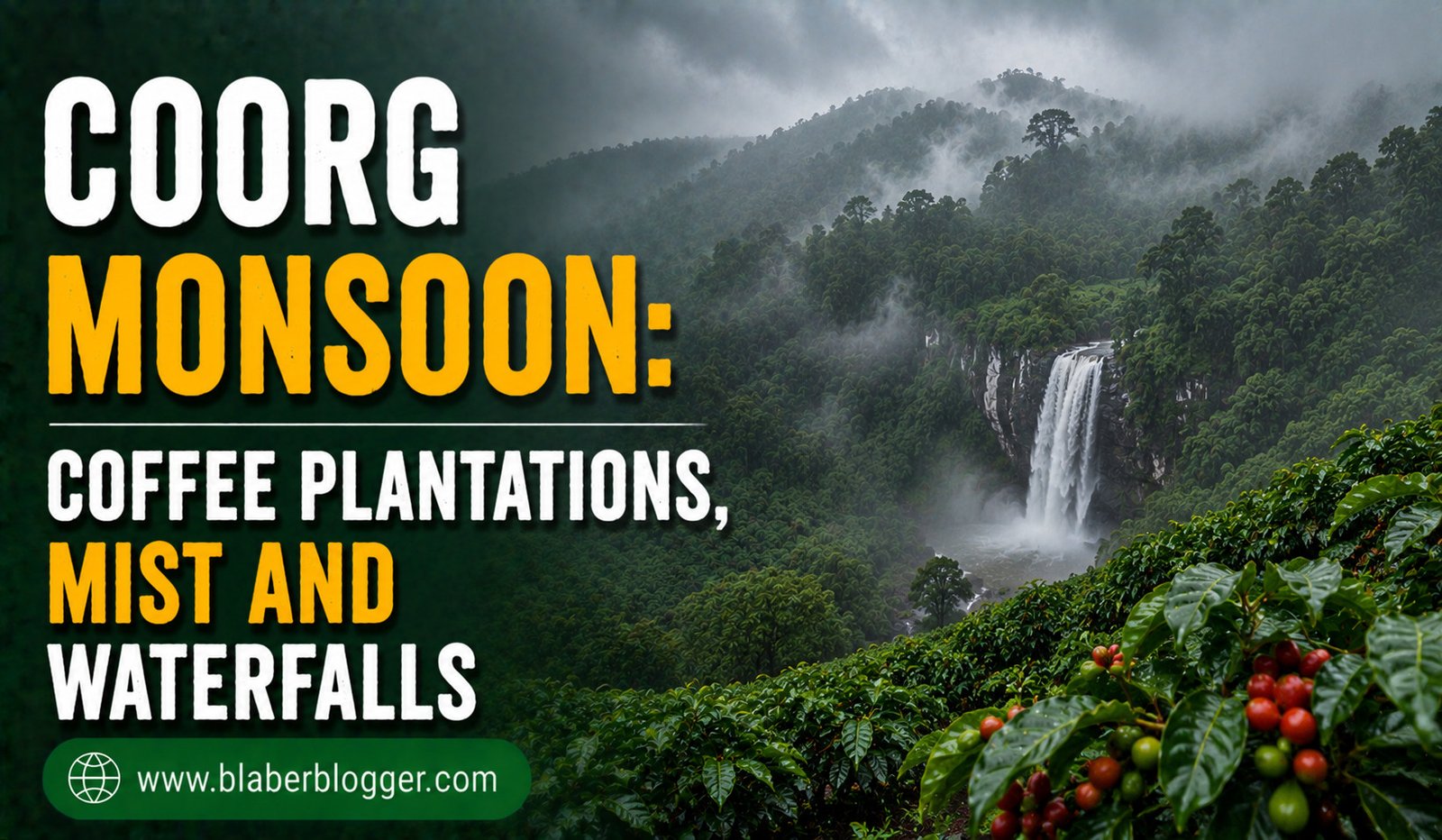
Coorg becomes a completely different destination when the monsoon arrives. The rolling hills turn greener, coffee plantations look freshly washed, waterfalls become more powerful, and mist settles over the valleys. For travellers looking for a peaceful escape surrounded by nature, Coorg during monsoon offers the perfect combination of scenic beauty, refreshing weather and memorable experiences.
Also known as Kodagu, Coorg is a popular hill destination in Karnataka and is famous for its coffee estates, forests, rivers, viewpoints and distinctive local culture. Rain adds another layer of beauty to the region, making even ordinary roads and plantation paths look spectacular.
A monsoon trip to Coorg is not about rushing from one attraction to another. It is about enjoying the sound of rain, sipping freshly brewed coffee, exploring green plantations and watching clouds move across the hills. Whether you are travelling with family, friends or a partner, Coorg offers plenty of ways to enjoy a relaxed rainy-season holiday.
Why Coorg Is Perfect for a Monsoon Holiday
The monsoon season generally brings frequent rainfall to Coorg between June and September. The showers rejuvenate the forests and plantations, fill streams and create seasonal waterfalls across the hills.
The cooler weather is another reason to visit during this period. Misty mornings and cloudy afternoons create a pleasant atmosphere for travellers who want to escape hot and humid city conditions.
Rain also gives the landscape a dramatic appearance. Roads winding through plantations may disappear into fog, while distant hills appear and disappear behind moving clouds. The unpredictable weather is part of the charm.
However, heavy rainfall can affect outdoor plans. Some trails may become slippery, waterfalls can develop strong currents and mountain roads may have reduced visibility. A flexible itinerary is therefore essential for a comfortable trip.
Explore Coorg’s Lush Coffee Plantations
Coffee is deeply connected with Coorg’s identity. Large plantations cover the hillsides, with coffee plants growing beneath shade trees and alongside pepper vines and other vegetation.
During monsoon, these plantations become particularly beautiful. The leaves look brighter after rain, droplets remain on the plants and the fragrance of wet soil mixes with the aroma of coffee.
Take a Coffee Plantation Walk
A guided plantation walk is one of the best experiences to include in a Coorg monsoon itinerary. Rather than simply seeing rows of coffee plants, visitors can learn about cultivation, shade management, coffee varieties and the journey from plantation to finished beverage.
The rainy season is ideal for enjoying the lush surroundings, although it is not the primary coffee harvesting period. Visitors should always enter private estates through authorised tours or with permission.
Walking through a plantation while light rain falls can be a memorable experience. The combination of mist, greenery and the earthy scent of the estate creates an atmosphere that feels far removed from busy city life.
Stay at a Coffee Estate
A plantation homestay can make a Coorg monsoon holiday even more enjoyable. Instead of using the accommodation only as a place to sleep, travellers can experience the landscape directly from their property.
Imagine waking up to mist-covered trees, listening to rainfall on the roof and starting the morning with locally prepared coffee. On rainy afternoons, a plantation stay also provides a comfortable alternative to outdoor sightseeing.
When choosing an estate stay, consider road accessibility during heavy rain and the availability of indoor facilities.
Discover Coorg’s Monsoon Waterfalls
Waterfalls are among the biggest reasons travellers visit Coorg during the rainy season. Increased rainfall gives the streams greater volume and makes the surrounding forests intensely green.
Abbey Falls
Abbey Falls is one of the most recognised waterfalls in the Coorg region. During monsoon, water rushes through the rocky landscape surrounded by dense vegetation.
The approach to the waterfall includes a walk through a green environment, making the journey almost as enjoyable as the destination itself. Visitors should wear footwear with good grip because the path can become wet and slippery.
The waterfall is particularly attractive for photography, but travellers should always remain within permitted viewing areas.
Mallalli Falls
Mallalli Falls is another impressive waterfall surrounded by the natural beauty of the Western Ghats. It is located towards the northern part of Coorg and becomes particularly dramatic after substantial rainfall.
The surrounding hills provide a beautiful backdrop, but the route can become challenging during periods of intense rain. Travellers should check local conditions before making the journey.
Iruppu Falls
Iruppu Falls is located in the southern part of Coorg and is surrounded by forest. The waterfall becomes more vibrant during the monsoon as water flows down the rocky landscape.
The area also has religious importance, making it suitable for travellers who want to combine nature with a cultural experience.
Enjoy Misty Viewpoints Across Coorg
Coorg’s hills and valleys are particularly atmospheric during the monsoon. Instead of clear blue skies, visitors often encounter clouds, fog and changing views.
Raja’s Seat
Raja’s Seat in Madikeri is one of the most popular viewpoints in Coorg. The elevated location provides views of surrounding valleys and hills.
During monsoon, mist can cover the landscape completely before suddenly lifting to reveal green slopes in the distance. This changing scenery gives the viewpoint a unique character.
Early morning or late afternoon can be particularly pleasant, provided the weather is not too severe.
Mandalpatti
Mandalpatti is famous for its panoramic mountain views and is one of the region’s popular highland destinations. Monsoon clouds often create a dramatic setting across the surrounding valleys.
The journey to Mandalpatti can be an adventure itself, particularly on rougher stretches. Depending on weather conditions, travellers may choose suitable local transport rather than driving all the way themselves.
Scenic Drives Through Coorg
For many travellers, the drive through Coorg is one of the highlights of the trip. Roads pass through coffee plantations, forests, villages and rolling hills, with mist appearing around bends.
Instead of treating the drive simply as a way to reach an attraction, slow down and enjoy the scenery. Safe roadside viewpoints and local cafés can provide opportunities to stop and appreciate the landscape.
Some enjoyable monsoon road-trip experiences include:
- Driving through mist-covered plantation roads
- Stopping at safe viewpoints for photographs
- Exploring countryside roads during lighter rainfall
- Enjoying hot coffee and local snacks along the way
Mountain roads require additional caution during heavy rain. Reduced visibility, wet surfaces and fallen branches can make driving more challenging.
Other Places to Explore During a Coorg Monsoon Trip
While waterfalls and plantations are the main attractions, Coorg has several other places worth including in a longer itinerary.
Madikeri Fort offers an opportunity to explore the region’s history, while the Namdroling Monastery at Bylakuppe introduces visitors to a vibrant Tibetan Buddhist cultural setting.
Dubare is known for its riverside surroundings and nature-based activities. Talakaveri is another significant destination associated with the origin of the Kaveri River and is surrounded by beautiful hill scenery.
During monsoon, avoid trying to visit every attraction in a single day. Choosing a few destinations based on their location can make the trip more relaxed.
Things to Do in Coorg During Monsoon
Coorg is a destination where simple experiences can become the most memorable. You can spend a morning exploring a coffee estate, enjoy a warm meal while watching rainfall and take an evening drive through misty roads.
Local food is another part of the experience. Traditional Kodava dishes and regional snacks can be especially comforting during cool, rainy weather.
For a well-balanced holiday, consider:
- Taking a guided coffee plantation tour
- Visiting waterfalls when weather conditions are safe
- Exploring misty viewpoints
- Spending an evening at a plantation stay
The goal should be to enjoy the atmosphere rather than follow a packed sightseeing checklist.
Three-Day Coorg Monsoon Itinerary
Three days provide enough time to explore Coorg without making the journey feel rushed.
| Day | Suggested Plan |
| Day 1 | Arrive in Coorg, check into a plantation stay and enjoy a relaxed evening |
| Day 2 | Visit Abbey Falls, explore Madikeri and spend time at Raja’s Seat |
| Day 3 | Visit Mandalpatti or another nearby attraction and begin the return journey |
If heavy rainfall affects your plans, use the extra time to enjoy your accommodation, explore local food or take a plantation tour when conditions improve.
What to Pack for Coorg During Monsoon
Rain can continue for several hours, so travellers should pack accordingly. Clothes may take longer to dry because of the cool and humid weather.
Important items include:
- Waterproof jacket or raincoat
- Shoes with good traction
- Quick-drying clothes
- Extra socks
- Waterproof bags for electronics
A small backpack is useful for day trips. Avoid carrying unnecessary items if you plan to walk through plantations or explore outdoor attractions.
Monsoon Safety Tips for Coorg
Coorg’s waterfalls, forests and mountain roads require extra caution during heavy rain. Water levels can rise quickly, and paths may become slippery.
Never enter fast-moving water or cross streams when currents are strong. Stay within designated areas around waterfalls and follow local instructions.
Drivers should be particularly careful on winding roads. Fog can appear suddenly, and visibility may fall considerably. Keep your speed low and allow extra time for the journey.
A few basic precautions can make your trip safer:
- Check the weather before leaving your accommodation.
- Avoid isolated trails during heavy rain.
- Follow restrictions around waterfalls and viewpoints.
- Keep extra travel time for rain-related delays.
Best Time to Experience Coorg Monsoon
The main monsoon season generally runs from June to September. July and August often provide lush greenery, active waterfalls and frequent mist.
Travellers looking for dramatic rainfall and full waterfalls may prefer the middle of the season. Those who want greener landscapes with somewhat easier outdoor sightseeing can consider the beginning or end of the monsoon.
The ideal period ultimately depends on your travel preferences and tolerance for heavy rain.
Final Thoughts
Coorg during monsoon is an experience built around nature, tranquillity and the simple pleasure of being surrounded by rain-washed landscapes. Coffee plantations become greener, waterfalls gain strength and mist covers the hills, creating a peaceful atmosphere throughout the region.
From a plantation walk and estate stay to Abbey Falls, Mallalli Falls, Raja’s Seat and Mandalpatti, there are plenty of ways to experience Coorg. Yet the destination does not need an overcrowded itinerary. Sometimes a slow drive through the hills, a cup of freshly brewed coffee and an evening listening to rainfall can be the highlight of the entire trip.
With suitable rain gear, careful planning and attention to weather conditions, a Coorg monsoon holiday can be a refreshing escape filled with coffee plantations, misty landscapes and spectacular waterfalls.
Frequently Asked Questions
1. Is Coorg worth visiting during monsoon?
Yes. Coorg becomes exceptionally green during the rainy season, with misty hills, flowing waterfalls and lush coffee plantations. It is particularly suitable for travellers who enjoy nature and peaceful surroundings.
2. Can I visit coffee plantations in Coorg during monsoon?
Yes. Plantation walks are available during the rainy season and can be a wonderful way to understand coffee cultivation. Visitors should enter private estates only through authorised tours or with permission.
3. Which waterfalls are best to visit in Coorg during monsoon?
Abbey Falls, Mallalli Falls and Iruppu Falls are popular choices. Water levels can change significantly during heavy rainfall, so visitors should check local conditions before visiting.
4. How many days are enough for a Coorg monsoon trip?
Three days are ideal for a relaxed trip covering plantations, waterfalls, viewpoints and cultural attractions. A shorter two-day visit can also work if you focus on a few major places.
5. Is Coorg safe during heavy monsoon?
Coorg can be visited during monsoon, but heavy rain requires additional caution. Waterfalls, trails and mountain roads can become slippery or difficult to access. Check weather conditions, avoid strong water currents and follow local safety instructions.