
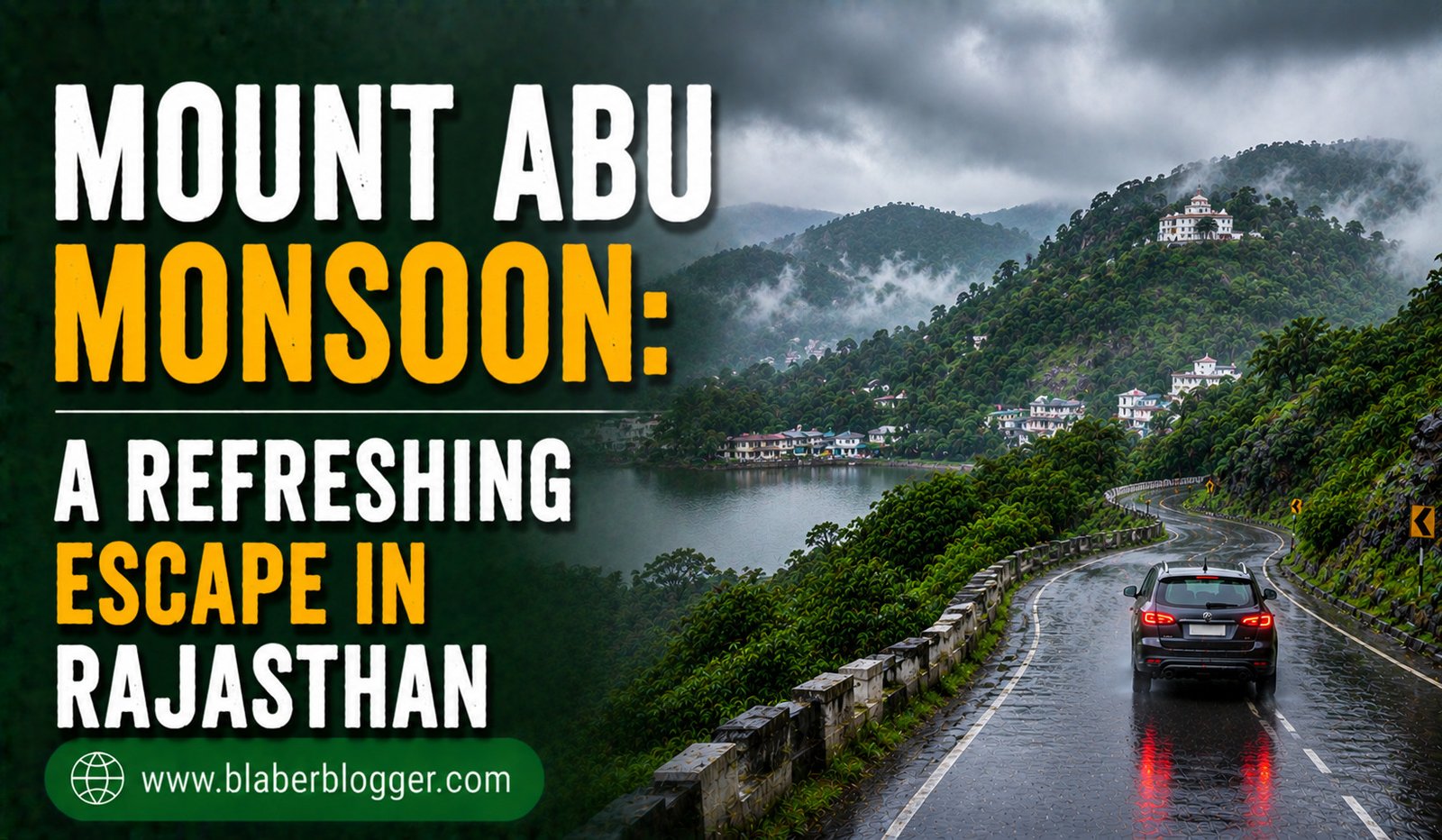
Mount Abu Monsoon: A Refreshing Escape in Rajasthan
Rajasthan is famous for its forts, palaces, deserts and colourful cities, but the state has a refreshing hill retreat that looks completely different during the rainy season. Mount Abu in monsoon becomes greener, cooler and more atmospheric as rainfall transforms the Aravalli Hills. Misty valleys, rain-washed roads, rejuvenated lakes and small waterfalls make this hill station an appealing escape from the summer heat.
Located in the Sirohi district, Mount Abu is the only major hill station in Rajasthan. Its elevated setting gives it a pleasant climate compared with much of the state, while its combination of natural and cultural attractions makes it suitable for different kinds of travellers.
A monsoon trip to Mount Abu is less about rushing between attractions and more about enjoying the scenery. A drive through mist-covered hills, an evening beside Nakki Lake or a cup of hot tea while watching the rain can become some of the most memorable moments of the journey.
Why Visit Mount Abu During Monsoon?
The arrival of rain gives Mount Abu a fresh appearance. Dry and rocky areas around the hills become covered with vegetation, while clouds frequently gather around the higher slopes. The cooler atmosphere makes sightseeing more comfortable, particularly for visitors escaping hot plains and cities.
The monsoon also brings life to streams and seasonal waterfalls. Roads winding through the Aravalli Hills become scenic routes, with greenery on both sides and mist occasionally reducing the distant view.
Another advantage is the variety of experiences available. If heavy rain makes outdoor sightseeing difficult, visitors can explore temples, local markets, cafés or indoor attractions instead.
However, monsoon travel requires flexibility. Rainfall can be unpredictable, and wet surfaces may make roads, steps and rocky viewpoints slippery. Planning fewer attractions each day allows you to enjoy the destination without unnecessary pressure.
Best Places to Visit in Mount Abu During Monsoon
Mount Abu has several attractions that become especially appealing when surrounded by clouds and greenery. Some are natural landmarks, while others provide opportunities to explore the area’s history and culture.
Nakki Lake
Nakki Lake is one of the most popular attractions in Mount Abu and a natural starting point for exploring the hill station. Surrounded by hills and distinctive rock formations, the lake offers a peaceful setting for a relaxed morning or evening.
During monsoon, the landscape around the lake becomes greener and the cloudy sky creates beautiful reflections on the water. Depending on weather conditions, boating may also be available.
The area around Nakki Lake is convenient for visitors because restaurants, cafés and shops are located nearby. You can combine a lakeside visit with an evening walk and some local shopping.
Toad Rock
Toad Rock is a distinctive rock formation located close to Nakki Lake. Its unusual shape and elevated position have made it a popular photography and sightseeing spot.
The surrounding landscape looks particularly attractive during monsoon when vegetation becomes greener and clouds gather over the hills. The rocks can become slippery after rain, so visitors should avoid climbing beyond safe areas.
A visit to Toad Rock can easily be combined with Nakki Lake, making both attractions suitable for the same part of your itinerary.
Guru Shikhar
Guru Shikhar is the highest point in the Aravalli Range and one of the most scenic places around Mount Abu. The route to the viewpoint passes through the hills and provides an enjoyable driving experience.
During monsoon, clouds can surround the peak and dramatically change the scenery. On clearer days, visitors can enjoy broad views of the surrounding landscape.
The weather at higher elevations can change quickly, so it is advisable to check conditions before travelling. Carrying a light rain jacket is useful even when the weather initially appears clear.
Sunset Point
Sunset Point is another well-known attraction in Mount Abu. The viewpoint is traditionally visited for evening views, although monsoon clouds may sometimes hide the actual sunset.
Even when the sun remains behind the clouds, the changing colours of the sky and mist-covered hills can create a beautiful atmosphere. Arriving a little before evening allows visitors to enjoy the landscape rather than focusing only on sunset.
Explore the Dilwara Temples
Mount Abu is not only a destination for nature lovers. The Dilwara Temples are an important cultural attraction and are known for their detailed marble craftsmanship.
The intricate carvings and architectural details provide a fascinating contrast to the natural scenery outside. Visiting the temples is also a useful option when rain becomes too heavy for outdoor sightseeing.
Travellers should follow the rules applicable to the temple complex, including guidelines regarding photography and appropriate behaviour. A visit here adds a cultural dimension to a monsoon holiday.
Experience the Beauty of Monsoon Waterfalls
Rainfall brings another attraction to Mount Abu: seasonal streams and waterfalls. Water flowing through the Aravalli slopes creates temporary cascades that can make the landscape look dramatically different.
Trevor’s Tank and Its Surroundings
Trevor’s Tank is surrounded by natural landscapes and is a pleasant destination for travellers interested in peaceful scenery. During monsoon, vegetation around the area becomes more vibrant, giving the location a refreshing appearance.
The surrounding environment is best explored cautiously. Forest areas and wet paths can become difficult to navigate after heavy rain, so visitors should stay on accessible routes.
Seasonal Water Streams
Small streams and rain-fed cascades can appear across the hills following substantial rainfall. Some may be visible along roads, while others can be found around natural areas.
Although these water features can be tempting for photographs, travellers should maintain a safe distance from fast-flowing water. Water levels can rise rapidly during intense showers.
Scenic Drives Through the Aravalli Hills
One of the most enjoyable ways to experience Mount Abu during monsoon is by road. The winding routes through the Aravalli Hills become surrounded by fresh greenery, mist and occasional streams.
A slow drive gives you time to appreciate the changing landscape. Instead of planning every stop, leave some room for safe viewpoints and roadside scenery.
Some simple experiences to include during a monsoon drive are:
- Stopping at safe viewpoints when visibility is good
- Enjoying the green landscape along winding hill roads
- Taking breaks at cafés for hot tea or snacks
- Photographing misty valleys from permitted areas
Driving requires additional care during rainfall. Wet surfaces can reduce tyre grip, while fog may appear suddenly around elevated sections.
Things to Do in Mount Abu During Monsoon
A successful monsoon holiday does not need a packed schedule. Mount Abu is particularly enjoyable when travellers slow down and spend time appreciating the atmosphere.
You can begin the morning with a walk around Nakki Lake, visit a cultural attraction during the afternoon and spend the evening enjoying local food. If the weather clears, a scenic drive can be added to the plan.
The local market is also worth exploring. Visitors can browse handicrafts, traditional items and souvenirs while enjoying snacks and beverages. Rainy weather makes warm food and drinks particularly appealing.
For a balanced Mount Abu experience, consider:
- Exploring viewpoints during breaks in rainfall
- Visiting the Dilwara Temples
- Spending relaxed time around Nakki Lake
- Exploring local markets and food
Suggested Two-Day Mount Abu Monsoon Itinerary
Two days are enough for a comfortable weekend trip if you focus on the major attractions rather than trying to cover every corner of the region.
| Day | Suggested Plan |
| Day 1 | Arrive in Mount Abu, visit Nakki Lake and Toad Rock, explore the local market and enjoy the evening |
| Day 2 | Visit the Dilwara Temples, explore Guru Shikhar and Sunset Point, then begin the return journey |
If rainfall becomes heavy, outdoor attractions can be rearranged. The flexibility to move a viewpoint or sightseeing stop to another time can make the trip much more enjoyable.
What to Pack for Mount Abu in Monsoon
The combination of rain, cool temperatures and wet walking surfaces means travellers should pack carefully. Comfortable footwear is particularly important if you plan to explore viewpoints or walk around the hills.
A practical monsoon packing list includes:
- Waterproof jacket or raincoat
- Comfortable shoes with good grip
- Extra clothes and socks
- Umbrella
- Waterproof pouch for mobile phones and other electronics
If you are travelling by car, inspect the tyres, brakes, headlights and windscreen wipers before starting the journey. Keeping basic emergency supplies in the vehicle is also sensible.
Monsoon Safety Tips for Mount Abu
Rain makes Mount Abu beautiful, but it can also create certain risks. Wet rocks, slippery steps and reduced visibility require extra caution.
Avoid entering streams or standing near fast-flowing water. Even seemingly shallow channels can become dangerous after heavy rainfall. Visitors should also follow signs and restrictions around viewpoints, forests and other natural attractions.
Driving through the hills requires patience. Reduce your speed on wet roads and be especially careful around sharp bends. If fog becomes dense, it is better to slow down or wait for visibility to improve.
A few important precautions include:
- Check weather conditions before leaving your accommodation.
- Avoid isolated trails during intense rainfall.
- Stay away from unsafe water crossings.
- Follow local instructions and access restrictions.
Best Time to Visit Mount Abu During Monsoon
The monsoon season generally extends from June to September. July and August can bring lush greenery, frequent cloud cover and active seasonal streams, although rainfall may also be heavier.
Travellers who want dramatic rainy-season scenery may enjoy the middle of the monsoon. Those who prefer easier outdoor sightseeing can consider periods with lighter showers.
Weekdays are often a better choice for visitors who prefer quieter surroundings. Popular places such as Nakki Lake and major viewpoints can become busy during weekends and holidays.
Final Thoughts
Mount Abu during monsoon offers a refreshing contrast to the traditional image of Rajasthan. Instead of desert landscapes and intense heat, travellers encounter green hills, cool air, mist-covered valleys and rain-fed streams.
Nakki Lake, Toad Rock, Guru Shikhar and Sunset Point provide opportunities to enjoy the natural scenery, while the Dilwara Temples add an important cultural element to the trip. Scenic drives through the Aravalli Hills make the journey itself part of the experience.
The best way to explore Mount Abu in the rainy season is to keep the itinerary relaxed. Give yourself enough time between attractions, prepare for sudden showers and avoid risky areas around water and steep terrain.
With comfortable rain gear, careful driving and a flexible plan, Mount Abu monsoon travel can become a memorable escape filled with greenery, mist, peaceful views and the refreshing charm of Rajasthan’s only hill station.
Frequently Asked Questions
1. Is Mount Abu worth visiting during monsoon?
Yes. Mount Abu becomes greener and cooler during the rainy season. Misty hills, refreshed landscapes, seasonal streams and cloudy skies make it an attractive destination for a relaxing monsoon getaway.
2. What are the best places to visit in Mount Abu during monsoon?
Nakki Lake, Toad Rock, Guru Shikhar, Sunset Point and the Dilwara Temples are among the main attractions. The best combination depends on rainfall and visibility during your visit.
3. Can I enjoy boating at Nakki Lake during monsoon?
Boating may be available depending on weather and local operating conditions. Heavy rain, strong winds or unsafe water conditions can affect boating activities, so check locally before planning it.
4. How many days are enough for a Mount Abu monsoon trip?
Two days are generally sufficient for a weekend visit covering the main attractions. Three days are better if you want to explore at a slower pace and leave extra time for weather-related changes.
5. Is Mount Abu safe during heavy monsoon?
Mount Abu can be visited during monsoon, but heavy rainfall requires additional caution. Wet roads, slippery rocks, fog and strong water currents can create risks. Check weather conditions, follow local instructions and avoid unsafe areas during severe weather.